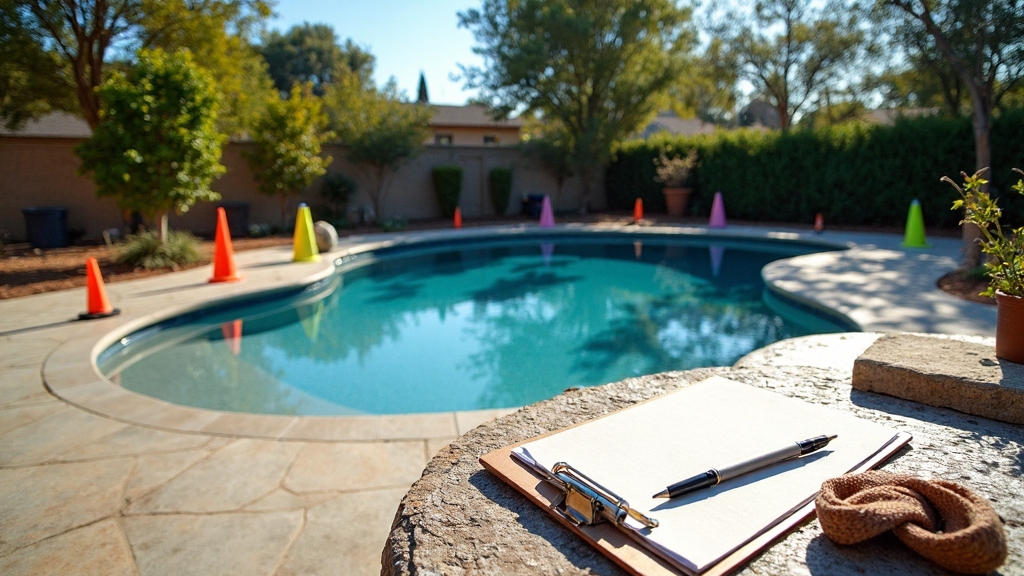


To avoid common pool construction delays, start with a thorough site evaluation to identify potential issues. Create detailed plans that comply with local building codes and allocate a realistic budget, including a contingency fund for unexpected expenses. Choose the right contractor and maintain clear communication throughout the process. Monitor weather forecasts and order materials in advance to sidestep supply chain issues. With these strategies in place, you’ll be better prepared for successful construction. Further insights await.
The Cliff Notes
Understanding Common Causes of Pool Construction Delays
When you’re planning a pool construction project, understanding the common causes of delays can help you stay ahead of potential issues. Weather-related delays, particularly heavy rain, can saturate soil and extend your pool construction timeline. Change orders from clients can also create significant setbacks, leading to rescheduling and product shortages. Additionally, supply chain issues have become more frequent, making essential pool equipment hard to obtain. Labor shortages post-pandemic further complicate matters by disrupting a consistent workforce. Finally, timely acquisition of building permits is vital; delays here can halt construction entirely. By proactively addressing these factors during your planning pool projects, you’ll be better equipped to mitigate risks and prevent construction setbacks, ensuring a smoother build process.
Importance of Thorough Site Evaluation
Understanding the common causes of pool construction delays is just the first step; a thorough site evaluation is equally important in ensuring your project runs smoothly. By investing time in this process, you can greatly avoid pool build delays and enhance pool project scheduling. Here are three key aspects to reflect on:
1. Soil Stability: Evaluate soil conditions to prevent structural issues later on.
2. Underground Utilities: Identify existing utilities to avoid costly rerouting during construction.
3. Water Runoff: Assess drainage to prevent flooding or erosion problems.
Engaging a professional for this evaluation can uncover hidden problems, allowing for necessary preparations and a smoother workflow. This proactive approach ultimately saves you time and money throughout your pool project.
The Role of Detailed Planning and Design
When you plan your pool project, having an accurate blueprint is essential to avoid costly delays. By identifying potential challenges early and collaborating with skilled professionals, you can streamline the construction process and keep everything on track. A detailed design not only sets clear expectations but also helps in addressing issues before they escalate. Additionally, obtaining the necessary local regulations before starting construction will ensure compliance and prevent unexpected interruptions.
Importance of Accurate Blueprint
A detailed blueprint is essential for keeping your pool construction project on track, as it acts as a roadmap for the entire process. Here’s why investing in an accurate blueprint is vital:
1. Prevents Mistakes: It minimizes costly errors and miscommunications between you and your contractor, ensuring everyone’s on the same page.
2. Guides Budgeting: Proper specifications for materials and dimensions help manage your budget effectively and keep the project within timeline constraints.
3. Ensures Compliance: A well-structured blueprint aligns with local building codes, reducing the risk of fines or construction halts. Additionally, it should incorporate necessary pool safety regulations to guarantee the safety of all users.
Identifying Potential Challenges Early
Accurate blueprints set the foundation for a successful pool construction project, but identifying potential challenges early can make all the difference in keeping your timeline intact. Conduct a thorough site evaluation to spot any soil issues or underground utilities that could lead to delays. Guarantee your planning includes detailed documentation of specifications, materials, and dimensions to minimize last-minute changes. Collaborate with a qualified pool builder to assess your yard layout, helping you avoid compliance issues with local codes and HOA restrictions. Additionally, set aside a contingency fund of 10-15% in your budget for unforeseen expenses. Finally, anticipate supply chain issues by ordering materials well in advance, reducing the risk of delays caused by shortages or equipment availability. Ensure that your plans include safety feature specifications to meet local regulations and prevent compliance-related setbacks.
Collaborating With Skilled Professionals
While engaging skilled professionals may seem like an added expense, it’s a critical investment in the success of your pool construction project. Collaborating with experienced builders or designers during the planning phase guarantees everything is documented, which greatly minimizes misunderstandings. Here are three key benefits of detailed planning:
1. Identify Issues Early: Experienced professionals can spot potential problems, such as soil stability or utility lines, before construction starts.
2. Enhance Communication: A well-defined vision fosters better dialogue between you and contractors, speeding up approvals.
3. Avoid Unexpected Costs: Thorough planning addresses all aspects, from permits to landscaping, leading to a realistic timeline.
Setting a Realistic Budget for Your Pool Project
When setting your pool project budget, it’s vital to account for all costs, including installation, permits, and any hidden expenses. Don’t forget to allocate a contingency fund of 10-15% to cover unexpected issues that may arise. Prioritizing essential features will help you stay within your financial limits while ensuring you achieve the pool of your dreams.
Understand All Costs
Setting a realistic budget for your pool project is essential to ensuring a smooth construction process. To avoid unexpected financial strain, consider all potential expenses. Here are three key areas to focus on:
1. Permits and Regulations: Research local laws to understand necessary permits and fees, as these can vary considerably.
2. Excavation and Site Preparation: Don’t underestimate costs related to excavation, soil conditions, and utility connections; they can add up quickly.
3. Material and Labor Costs: Collaborate closely with your pool builder to get accurate quotes for materials, labor, and any additional features you want.
Include Contingency Funds
Including a contingency fund in your budget is crucial, as it acts as a financial safety net for unexpected expenses that may arise during your pool construction project. Allocate 10-15% of your total budget for this purpose. Collaborating with your builder guarantees all costs are considered, preventing delays caused by underestimating expenses. A well-structured budget helps you navigate the complexities of pool construction smoothly.
| **Budget Item** | **Estimated Cost** | **Contingency (10-15%)** |
|---|---|---|
| Permits & Fees | $2,000 | $200 – $300 |
| Excavation | $5,000 | $500 – $750 |
| Landscaping | $3,000 | $300 – $450 |
Invest time in planning to enhance your project’s success and satisfaction.
Prioritize Essential Features
To guarantee your pool project stays within budget and meets your needs, it’s vital to prioritize essential features from the outset. This proactive approach helps you allocate your resources effectively and avoid unexpected costs. Here’s how you can prioritize:
1. Define Must-Haves: Identify the essential components like excavation, plumbing, and fencing before starting.
2. Choose Pool Type Wisely: Decide between in-ground concrete pools for customization or more affordable vinyl and fiberglass options.
3. Collaborate with Your Contractor: Work closely with your contractor to ascertain a realistic budget that includes necessary permits and utility connections.
Choosing the Right Pool Contractor
Choosing the right pool contractor is essential, as a qualified professional can make all the difference in keeping your project on schedule. Start by conducting thorough research: check licenses, insurance, and bonding to guarantee they can handle your project responsibly. Gather referrals from friends and review online portfolios to assess their experience and style. It’s wise to interview multiple contractors; ask detailed questions about their processes, timelines, and past projects to gauge their expertise. Visit ongoing job sites to evaluate cleanliness, professionalism, and work quality. Finally, ensure your contract clearly outlines the scope of work, pricing, payment terms, warranty, and timeline. This proactive approach can help you avoid misunderstandings and delays throughout your pool construction journey.
Preparing for Weather-Related Delays
To keep your pool construction on track, it’s essential to monitor weather forecasts closely and anticipate seasonal changes. By understanding potential weather impacts, you can implement effective contingency strategies that allow for quick adjustments to your schedule. Staying proactive in your communication with your builder will help mitigate any weather-related delays.
Monitor Weather Forecasts
How can staying ahead of the weather forecast make a difference in your pool construction timeline? By keeping an eye on the forecast, you can anticipate and mitigate weather-related delays. Here are three proactive steps you can take:
1. Check forecasts regularly: Unpredictable rain can saturate the soil, causing delays. Regular updates help you plan accordingly.
2. Communicate with your builder: Share weather insights to facilitate timely schedule adjustments, ensuring your project stays on track.
3. Prepare for windy conditions: High winds can affect plaster finishes and concrete curing. Knowing this in advance allows you to manage expectations and adjust timelines.
Plan for Seasonal Changes
As you prepare for pool construction, recognizing the impact of seasonal changes on your timeline can make a significant difference in avoiding delays. Spring and summer are ideal for building, but unexpected rain can disrupt progress, especially if the soil becomes saturated. It’s vital to collaborate with builders to monitor weather forecasts closely and adjust your timeline accordingly. Be aware that clay soils retain moisture longer than sandy ones, delaying work until conditions improve. Additionally, windy conditions can hinder plaster application and concrete curing, further extending your project timeline. By planning for these potential weather-related issues in advance, you can guarantee a smoother construction process and keep your dream pool on track.
Implement Contingency Strategies
While unexpected weather can throw a wrench in your pool construction plans, implementing effective contingency strategies can greatly minimize delays. Here are three proactive steps you can take:
1. Schedule Wisely: Plan your construction during spring and summer, keeping an eye on local climate patterns to avoid unseasonal rain.
2. Budget for the Unexpected: Set aside 10-15% of your budget for unforeseen costs due to weather-related delays, such as extra labor or materials.
3. Prepare the Site: Conduct thorough site evaluations to identify drainage issues and use protective measures like tarps to shield excavated areas from rain.
Ensuring Compliance With Local Building Codes
Guaranteeing compliance with local building codes is vital to keeping your pool construction on schedule, as failing to do so can lead to costly fines and project delays. Familiarize yourself with the relevant codes and regulations, as this knowledge is imperative for avoiding legal issues. Before you begin construction, obtain all necessary permits to guarantee adherence to local laws, minimizing the risk of work stoppages. Key safety features like proper fencing, alarms, and depth markers must be integrated into your design to meet regulations. Working with a qualified pool contractor experienced in your area’s codes can streamline this process. Additionally, schedule regular inspections during construction to verify compliance and address any issues promptly to prevent delays.
Securing Materials in Advance
To keep your pool construction on track, securing materials in advance is crucial, especially given the unpredictable nature of supply chains. Delays in obtaining essential items like pumps and filtration systems can greatly impact your project timeline. Here are three proactive steps you can take:
1. Create a Thorough List: Before construction starts, outline all necessary materials, including landscaping and fencing, to avoid any last-minute shortages.
2. Order Early: Place orders well ahead of your project to sidestep extended completion dates caused by product shortages.
3. Communicate with Suppliers: Stay in close contact with your suppliers to guarantee timely deliveries, especially for items prone to delays due to regulations.
Maintaining Clear Communication With Your Contractor
Maintaining clear communication with your contractor is essential for keeping your pool construction on schedule, as it helps prevent misunderstandings and fosters a productive working relationship. Establish a regular communication schedule to receive updates on project progress and address concerns quickly. Consider using a shared project management tool or app for real-time updates and document sharing, ensuring alignment on timelines and changes. Encourage open dialogue regarding potential delays, such as weather or supply chain issues, to help you stay patient during construction. Ask for detailed timelines and milestones to track progress and identify any deviations from the original schedule. Finally, be approachable and responsive, as strong communication can lead to a more efficient construction process and minimize misunderstandings.
Strategies for Managing Unexpected Site Issues
While unexpected site issues can derail your pool construction, having a strategy in place can help you navigate these challenges effectively. Here are three proactive steps to manage potential setbacks:
Unexpected site issues can disrupt pool construction, but a solid strategy helps you effectively manage these challenges.
1. Conduct Thorough Site Surveys: Before construction starts, perform detailed site surveys and soil tests. This helps identify unstable soil or underground utilities that could cause delays.
2. Develop a Contingency Plan: Create a budget and plan that accounts for unexpected conditions like boulders or groundwater issues during excavation.
3. Maintain Open Communication: Keep communication lines open with your contractor. This allows for quick adjustments to the construction plan, ensuring you’re prepared for any unforeseen site challenges.
Frequently Asked Questions
Why Do Pools Take so Long to Build?
Pools often take longer to build due to several factors. Weather conditions like rain or wind can halt progress, as builders prioritize safety. Change orders from clients may disrupt timelines, especially if they lead to product shortages. Additionally, labor shortages can slow down work, while equipment breakdowns may cause unexpected delays. Ultimately, securing building permits can be time-consuming, and any setbacks here can greatly extend your project’s timeline.
What Happens if It Rains During Pool Construction?
If it rains during your pool construction, it can lead to significant delays. Saturated soil might halt work as it needs to dry out first. Rain can also cause cave-ins in the excavated area, creating extra mess and requiring additional repairs. Open trenches could collapse, complicating plumbing installation further. To mitigate these issues, verify your builder has protective measures in place and maintain open communication to stay updated on any changes to the timeline.
What Is the Best Time to Build a Pool?
Building a pool is like planting a seed; timing is everything. The best time to start your pool project is early spring or summer when the weather’s more predictable. By planning ahead, you can avoid the rush and guarantee contractors have availability. Initiating the process several months in advance allows for necessary permits and prepares the site, keeping your dream pool on track for those sunny days ahead.
Is the Swimming Pool Industry Slowing Down?
Yes, the swimming pool industry is slowing down compared to the pandemic peak. You might notice fewer project inquiries and longer lead times for materials due to ongoing supply chain issues. Labor shortages are also impacting builders’ ability to stay on schedule. With rising inflation and interest rates, many potential buyers are reconsidering their plans. To navigate this slowdown, staying informed and communicating with your builder can help guarantee your project stays on track.