

Building a pool on a slope in Sonoma is absolutely possible, but it comes with unique challenges. You’ll need to take into account site grading, drainage systems, and potential retaining walls for stability. Selecting the right pool type, whether an in-ground or above-ground design, is vital. The overall cost can increase due to these factors, and compliance with local regulations is essential. Understanding these elements now can set the stage for creating your perfect outdoor oasis.
The Cliff Notes
Understanding the Challenges of Building on a Slope
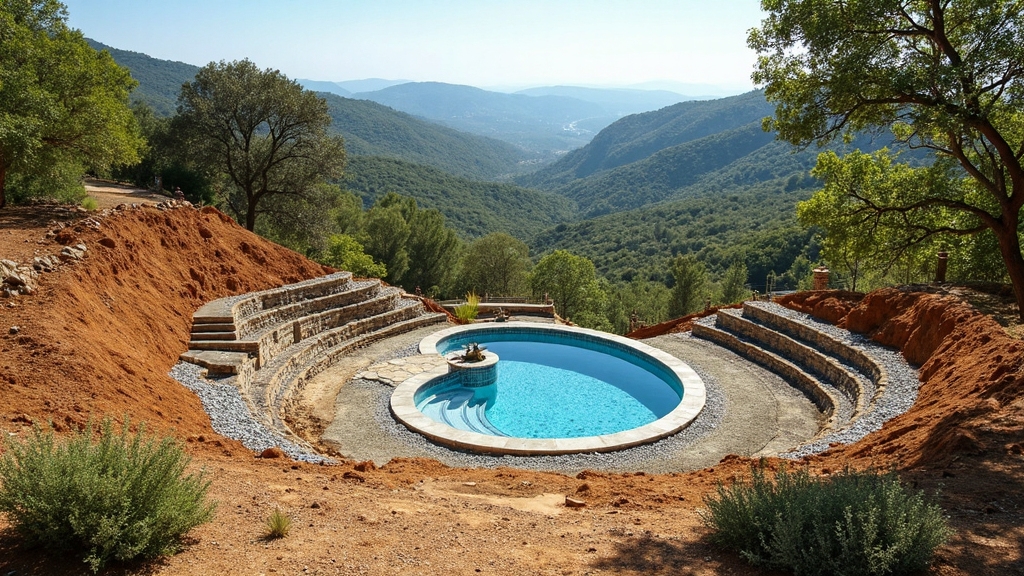
When considering building a pool on a slope, it’s vital to understand the unique challenges that come with it. Constructing a pool on a hill in Sonoma often requires meticulous grading and may involve installing retaining walls to create a stable, level surface. Steeper slopes can escalate construction costs due to the need for additional structural support and effective drainage solutions. You must also comply with the American National Standard for pool floors, ensuring the slope from the shallow to deep end doesn’t exceed 1 foot in 7 feet for safety. A professional assessment is important to evaluate site-specific conditions, which can greatly influence design choices and the feasibility of your hillside pool project.
Design Strategies for Sloped Yards
When designing a pool on a slope, incorporating retaining walls can not only manage erosion but also enhance the aesthetic appeal of your space. You’ll want to explore various decking solutions that complement the landscape while providing safe access to your pool area. By balancing functionality with beauty, you can create a harmonious outdoor oasis that maximizes your hillside property’s potential.
Retaining Walls Benefits
Although building a pool on a slope presents unique challenges, incorporating retaining walls can greatly enhance both functionality and aesthetics. In hillside pool construction, these walls offer essential structural support, preventing soil erosion and ensuring stability. They can be crafted from natural materials, seamlessly blending into your landscape while elevating the overall look of your sloped yard pool design.
Decking Solutions Overview
Designing decking solutions for sloped yards not only enhances the usability of your pool area but also transforms it into a visually appealing retreat. Multi-level designs create distinct lounging areas, while materials like composite decking or natural stone add durability and style. Incorporating terraced decking allows for seamless changes, minimizing erosion, and elevating the deck aids in effective drainage management. Curved or freeform designs soften hardscapes, enhancing visual flow.
| Design Feature | Benefits | Material Options |
|---|---|---|
| Multi-Level Decking | Distinct lounging areas | Composite, Wood |
| Terraced Decking | Smooth elevation changes | Natural Stone, Concrete |
| Curved Decking | Visual flow enhancement | Composite, Pavers |
| Elevated Decking | Improved drainage management | Wood, Composite |
| Integrated Seating | Increased usability | Built-in Benches |
Types of Pools Suitable for Sloped Properties
When considering a pool for your sloped property, you’ll find both in-ground and above-ground options that cater to your needs. In-ground pools, like concrete and fiberglass, can be engineered to adapt to elevation changes, while above-ground solutions might offer easier installation and flexibility. Each choice brings unique challenges and benefits, so it’s essential to weigh them against your landscape and lifestyle. Additionally, it is important to adhere to drowning prevention safety features to ensure the safety of your pool area.
In-Ground Pools Options
Choosing the right type of in-ground pool for a sloped property involves careful consideration of both the landscape and your specific needs. Concrete pools are often the best choice for complex designs, as they can be customized and reinforced to handle elevation changes. If you prefer quicker installation, fiberglass pools are pre-manufactured and can adapt to certain slopes, though they may have some limitations. Vinyl pools provide a budget-friendly option with their plastic or metal frames, but they’re less durable on steep inclines. Keep in mind that building on a slope may require retaining walls to manage water levels effectively. Ultimately, evaluating environmental factors and your family’s needs will guide your decision on the most suitable pool type.
Above-Ground Pool Solutions
Above-ground pools present an excellent solution for sloped properties, offering flexibility and ease of installation. Unlike in-ground pools, these pools require minimal site preparation, making them ideal for uneven terrain. Their modular designs allow you to adjust the height, effectively accommodating various slope degrees. Constructed from durable materials like galvanized steel or resin, these pools promise longevity even on a slope. You can also enhance usability by adding decks or platforms, creating a level entry area. While some leveling may be necessary for stability and safety, the overall excavation is considerably less than traditional options. With above-ground pools, you can enjoy your hillside property without the extensive planning that in-ground installations require.
The Role of Retaining Walls in Pool Construction
Building a pool on a slope brings unique challenges, and incorporating retaining walls is essential to overcoming these obstacles. Retaining walls manage the structural integrity of your pool, providing vital support while preventing soil erosion. They help create a level surface, ensuring even water distribution and a safe swimming environment. You can choose from various materials like stone, concrete, or timber, allowing you to design walls that enhance your pool’s aesthetics. However, keep in mind that building these walls involves additional costs for materials and labor, which should be factored into your budget. Additionally, it’s important to integrate proper drainage systems into the design to manage water runoff effectively, preventing flooding around your pool area.
Incorporating Infinity Pools in Sloped Areas
When considering an infinity pool for your sloped property, you’ll find that its design not only enhances the visual appeal but also integrates seamlessly with the landscape. The enchanting illusion of water merging with the horizon transforms your outdoor space into a stunning oasis. On a slope, the strategic inclusion of a hidden reservoir is essential; it collects water and creates a breathtaking waterfall effect over the edge. Careful planning for drainage and water flow is vital to maintain functionality and prevent erosion. Incorporating structural retaining walls provides necessary support while enhancing aesthetic beauty. Additionally, surrounding your infinity pool with natural landscaping elements will blend it harmoniously into the hillside, elevating its charm and allure.
Cost Considerations for Building on a Slope
Creating a stunning infinity pool on a slope enhances your outdoor space but also brings with it a range of cost considerations that must be carefully evaluated. Constructing on a slope typically increases overall expenses due to necessary ground leveling, which often requires additional excavation and grading. You’ll likely need to invest in retaining walls and drainage systems to manage runoff, further inflating costs. The steeper the incline, the more complex engineering solutions become, adding to your budget. Custom features like infinity edges or terracing also elevate expenses because of their intricate design and construction. With standard pool construction starting around $105,000, it’s essential to account for these slope-related costs for a thorough budget estimate.
Necessary Permits and Regulations for Pool Construction
Have you considered the permits and regulations necessary for constructing a pool on your sloped property in Sonoma? Guiding through the approval process is essential to guarantee that your project complies with local laws. Here are three key steps you’ll need to follow:
Navigating permits and regulations is crucial for pool construction on sloped properties in Sonoma.
1. Obtain a Building Permit: Every pool construction requires a permit unless specifically exempted by local codes.
2. Submit Engineering Plans: Your structural plans must be approved to address safety and zoning regulations, including fencing and alarms.
3. Contact Permit Sonoma: Before starting, reach out for any additional permits or technical reviews to avoid violations that could delay your project. Additionally, ensure that your pool complies with local building codes to prevent any complications.
Taking these steps will help you pave the way for a successful pool installation on your hillside property.
Tips for Maintaining a Pool on a Slope
Maintaining a pool on a slope can be challenging, yet with the right strategies, you can guarantee it remains a safe and enjoyable oasis. Here are some essential tips to help you navigate the unique demands of your sloped pool.
| Maintenance Task | Recommended Action |
|---|---|
| Water Chemistry | Regularly check and adjust to guarantee even distribution. |
| Drainage System | Inspect and maintain to prevent water accumulation. |
| Retaining Walls Inspection | Schedule frequent checks for integrity and erosion. |
| Pool Cleaners | Use robotic cleaners for effective cleaning on slopes. |
| Pump System | Invest in a variable-speed pump for ideal circulation. |
Maintaining proper water chemical balance is crucial to ensure swimmer health and prevent damage to pool components.
Frequently Asked Questions
Can a Pool Be Installed on a Slope?
Yes, you can install a pool on a slope, but it requires careful planning. You’ll need to take into account grading, retaining walls, and drainage systems to guarantee the pool’s stability and functionality. These elements can greatly increase your costs, especially if the slope is steep. It’s crucial to consult with experienced builders who understand local regulations and can help create a safe and level water surface tailored to your property’s unique topography.
Is It More Expensive to Build a Pool on a Slope?
Yes, it’s generally more expensive to build a pool on a slope. You’ll need to take into account additional costs for leveling the ground, which can greatly increase construction expenses. Retaining walls and drainage systems are often necessary, adding to your overall budget. The steeper the slope, the more complex the engineering solutions required, leading to even higher expenses. Custom features, like terraces, can also escalate your costs, so plan your budget accordingly.
What Is the Best Pool Option for a Sloped Yard?
When considering the best pool option for a sloped yard, concrete pools often stand out due to their durability and customization. They can be designed to fit the incline but require extensive excavation. If you prefer quicker installation, fiberglass pools are a solid choice, though design options may be limited. Additionally, incorporating retaining walls can enhance functionality and aesthetics. Infinity edge pools provide a stunning visual effect, seamlessly blending with your landscape.
How Much Does a Retaining Wall Cost for a Pool on a Slope?
You’d think building a pool on a slope would be a walk in the park, right? Well, not quite. The cost of a retaining wall can range from $3,000 to $10,000, influenced by materials and design complexity. You’re looking at $15 to $50 per square foot, plus an additional 10% to 20% for construction. Don’t forget about proper drainage to avoid water woes, which can further stretch your budget. Planning is key!