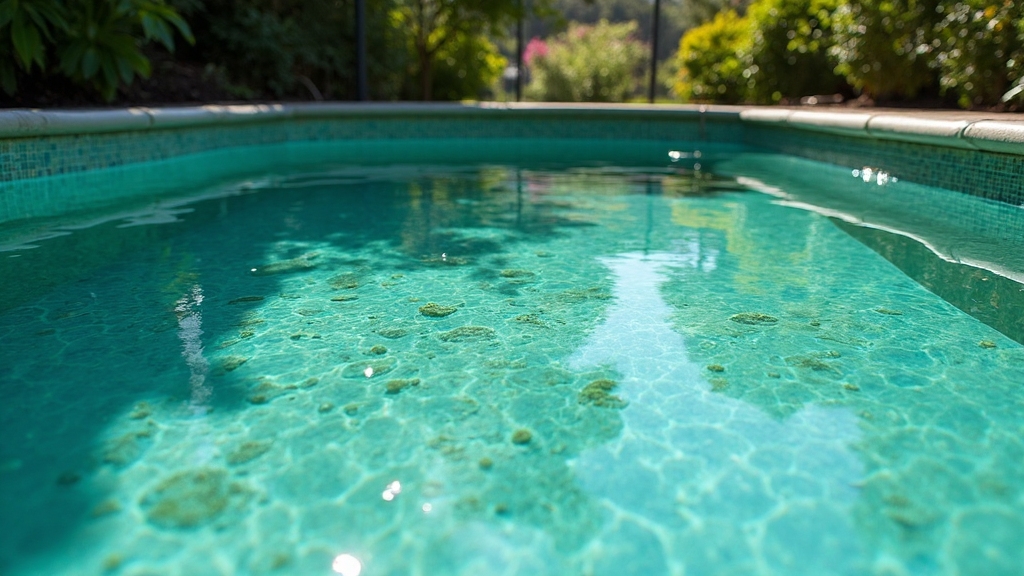


If your pool’s water is green, it likely signals algae growth due to low chlorine or high pH. Start by brushing all surfaces and testing your water’s alkalinity and pH levels. Shock the pool with chlorine, ensuring levels exceed 3 ppm. Run the filter continuously for at least 24 hours to clear up dead algae. If the problem persists, there are additional treatments and steps you can take to achieve clarity quickly. Discover more solutions ahead.
The Cliff Notes
- Brush all pool surfaces to remove algae buildup and improve chemical distribution.
- Test and adjust pH to 7.2-7.8 and alkalinity to 80-120 PPM.
- Shock the pool with double or triple chlorine doses to eliminate algae effectively.
- Run the filtration system continuously for at least 24 hours to clear dead algae.
- Consider adding an algaecide and monitor chlorine levels to maintain clarity.
Why Is My Pool Green?
Why is your pool green? A green pool typically indicates algae growth, which flourishes in warm temperatures, especially when chlorine levels are low or pH exceeds 7.8. Heavy rains can disrupt chemical balance, creating favorable conditions for algae. Additionally, poor water circulation from malfunctioning pumps or filters can lead to stagnant areas, allowing algae to thrive. High copper levels, often from algaecides or metal treatments, can also tint the water green, even without algae present. For effective green pool troubleshooting, regularly test your water chemistry, focusing on chlorine and pH levels. This proactive approach, along with algae removal tips, will help you clear cloudy pool water and prevent future algae outbreaks. Maintaining proper water chemical balance is essential to preventing these issues.
Steps for Cleaning a Green Pool
Addressing the issue of green pool water requires a systematic approach to restore clarity and hygiene. Start by thoroughly brushing all pool surfaces, including walls and corners, to dislodge any algae buildup. Next, test and adjust your pool’s alkalinity to 80-120 PPM and pH levels to stay within the ideal range of 7.2-7.8, ensuring optimal chlorine effectiveness. Proceed to shock the pool with double or triple doses of chlorine to kill the algae and contaminants. Run the pool filter continuously for at least 24 hours to eliminate dead algae and improve water clarity. Additionally, maintaining proper chemical balance is essential for effective algae control. Finally, repeat the cleaning process, including brushing and vacuuming, until you completely fix green pool water in Sonoma. Emergency pool cleaning may be necessary if issues persist.
What If My Pool Is Still Green After Shocking?
If your pool is still green after shocking, it’s essential to check the chemical levels, starting with free chlorine and pH. A malfunctioning filtration system may also be contributing to the problem, so inspect it thoroughly. Finally, consider additional algae treatment options, such as algaecides or phosphate removers, to effectively address persistent green water. Additionally, ensure that your filtration system is running efficiently, as a well-maintained system is crucial for preventing algae growth.
Check Chemical Levels
Checking your chemical levels is essential when your pool remains green after shocking. Start by testing the free chlorine levels; they should be above 3 ppm to effectively combat algae. Next, verify the pH and alkalinity; maintain a pH between 7.2-7.6 and total alkalinity within 80-120 ppm to optimize chlorine effectiveness. Additionally, consider testing for copper levels, as excessive copper can cause green discoloration in water, regardless of algae presence. If the pool is still green after these checks, reassess your approach. You might need to re-shock the pool with a higher chlorine dose and consider using an algaecide to tackle stubborn algae. Addressing these chemical levels is vital for restoring clarity to your water.
Inspect Filtration System
While confirming proper chemical levels is crucial, a malfunctioning filtration system can also be the culprit behind persistent green water. First, inspect your filter to confirm it’s free of clogs or debris. A dirty or malfunctioning filter can hinder water circulation, leaving dead algae in the pool and causing ongoing discoloration. Backwashing or cleaning the filter can remove trapped algae and enhance its efficiency. Additionally, check that your pump is running continuously for at least 24 hours after shocking. This confirms proper chemical distribution and aids in clearing the water. If you still face issues, consider replacing or upgrading your filtration system to guarantee adequate circulation and filtration, which is essential for maintaining clear pool water.
Algae Treatment Options
Even after shocking your pool, persistent green water can indicate that additional measures are needed to tackle the algae problem effectively. First, consider adding an algaecide specifically designed for the type of algae present; this can enhance your initial treatment. Make certain your filtration system runs continuously for at least 24 hours post-shock to help eliminate dead algae and prevent regrowth. Conduct a water chemistry test to verify free chlorine levels; if they’re below 3 ppm, you may need to shock again. Regularly brush the pool’s walls and floor to dislodge any lingering algae, improving circulation. If green persists, a clarifier or flocculant can help bind dead algae particles, making them easier to filter out.
What To Do If Your Chlorine Is High But Pool Is Still Green
If your pool’s chlorine levels are high yet the water remains green, it’s crucial to investigate several underlying issues. Here are key factors to take into account:
- **Free Chlorine vs. Total Chlorine**: High total chlorine may not mean effective sanitation; check free chlorine levels.
- **pH and Alkalinity**: A pH above 7.8 can reduce chlorine effectiveness; aim for 7.2-7.6.
- **Copper Levels**: Elevated copper can cause green water despite high chlorine; test and treat for metal oxidation.
- **Filtration and Circulation**: Verify your pump and filter are functioning properly to distribute chlorine evenly.
After addressing these issues, think about adding an algaecide to target resistant algae types for effective remediation.
How Fast Can You Clear a Green Pool?
To clear a green pool, you’ll need to act quickly with immediate treatment options like shocking the water and running the filter continuously. Chemical balancing is essential for restoring clarity and preventing future algae growth, so regular testing and adjustments are a must. Typically, you can expect to see significant improvement within 4 to 5 days if you maintain consistent care.
Immediate Treatment Options
Since green pool water usually indicates an algae problem, addressing it quickly is essential for restoring clarity. Here are immediate treatment options you can implement:
- Shock the pool with a **high dose of chlorine** (around 20 ppm) to effectively kill algae and contaminants.
- Keep the **pool filter** running continuously for at least 24 hours post-shocking to remove dead algae and debris.
- Use an algaecide formulated for your pool type to enhance the shock treatment’s effectiveness and prevent future algae growth.
- Regularly brush and vacuum the pool surfaces to dislodge algae and improve water circulation.
If your pool remains cloudy after these steps, consider adding a clarifier or flocculant to bind fine particles for easier removal.
Chemical Balancing Steps
Balancing the chemicals in your pool is essential for clearing green water effectively, as it helps restore the water’s clarity and prevents future algae growth. First, adjust the pH to a range of 7.2-7.6, ensuring ideal chlorine effectiveness. Next, raise free chlorine levels above 3 ppm and shock the pool with a high dose of chlorine, approximating a free chlorine level of 20 ppm to eliminate existing algae and bacteria. Run your pool filter continuously for at least 24 hours to remove dead algae and impurities. Retest the water daily, adjusting chlorine as needed and adding algaecide if necessary. Finally, incorporate a clarifier the day after shocking to enhance clarity and consider using a flocculant for stubborn algae.
Timeframe for Clarity
If you act quickly to address the green water in your pool, you can typically achieve clarity within 4-5 days. The exact timeframe depends on the severity of algae growth and the effectiveness of your cleaning efforts.
To expedite the process, consider the following steps:
- **Initial treatments:** Brush, vacuum, and shock the pool within the first 24 hours.
- **Continuous filtration:** Run the filter nonstop for at least 24 hours after shocking to remove dead algae.
- **Algaecide and clarifier:** Use these additives for stubborn cases to speed up clarity.
- **Regular testing:** Monitor and adjust pH and chlorine levels during the cleaning process for best results.
Professional Pool Cleaning Services
While tackling green pool water can be a challenging task, enlisting professional pool cleaning services can provide a swift and effective solution. Companies like ASP – Americas Swimming Pool Company specialize in rapid algae removal and pool clarity restoration, allowing you to get back to swimming quickly. Their expertise in managing algae issues is crucial for maintaining crystal clear water throughout the year. Regular professional maintenance not only prevents costly repairs but also guarantees peace of mind. These services typically include thorough water chemistry testing and balancing, which are fundamental for preventing future algae outbreaks. Local teams can tailor their services to your pool’s specific needs, enhancing overall care and maintenance for a safe and enjoyable swimming experience.
Frequently Asked Questions
How to Clear a Green Pool Quickly?
To clear a green pool quickly, shock it with a high dose of chlorine, aiming for at least 20 ppm to effectively kill algae. Run the pool filter continuously for 24 hours to help eliminate dead algae. Brush all surfaces to dislodge algae before vacuuming. Test and adjust the pH to between 7.2 and 7.6, and consider adding an algaecide if needed, followed by a clarifier the next day to remove remaining particles.
How Do You Get Rid of Green Water Fast?
To get rid of green water fast, start by shocking your pool with a high dose of chlorine, aiming for 20 ppm. Before doing this, verify your pH level’s between 7.2 and 7.6 for ideal chlorine effectiveness. Run your filter continuously for at least 24 hours after shocking to clear out dead algae. You might also want to use an appropriate algaecide and a clarifier the next day to enhance results.
What Kills Pool Algae the Fastest?
When it comes to killing pool algae, think of chlorine as the knight in shining armor. Shocking the pool with a high dose—typically 20 ppm or more—can swiftly vanquish algae. If you’re dealing with stubborn strains, adding a quality algaecide can be a game-changer. To maintain control, keep your free chlorine levels above 3 ppm and run the filter continuously for at least 24 hours to clear away the remnants of battle.
How to Clear Green Pool Water in 24 Hours?
To clear green pool water in 24 hours, start by shocking it with a high dose of chlorine, ideally 20 parts per million. Before doing that, check that your pH levels are between 7.2 and 7.6, as high pH can reduce chlorine’s effectiveness. Run the filter continuously for at least 24 hours to eliminate dead algae. If algae persists, consider using an appropriate algaecide after the initial shock treatment. Regular brushing and vacuuming are also essential.