


To winterize your pool in Sonoma, start when temperatures consistently fall below 65°F. Gather winterizing chemicals, a sturdy cover, and cleaning tools. Clean the pool thoroughly, balance water chemistry, and lower the water level properly. Drain and store equipment, then securely install the winter cover. Regularly check the cover and water levels throughout the winter to prevent any damage. By following these steps, you’ll guarantee your pool’s health through the colder months, and you’ll discover more essential tips.
The Cliff Notes
- Begin winterizing your pool in Sonoma when temperatures consistently drop below 65°F, ideally late summer to early fall.
- Thoroughly clean the pool by removing accessories, skimming, and vacuuming before starting the winterization process.
- Test and balance the water chemistry to ensure pH is between 7.2-7.6, alkalinity is 80-120 ppm, and chlorine levels are 2-4 ppm.
- Lower the water level to 12-18 inches below the skimmer and drain equipment, blowing out plumbing lines and sealing with plugs.
- Securely install a sturdy winter cover, ensuring it’s free from sagging and damage, and regularly check for debris during winter months.
When to Start Winterizing Your Pool
As temperatures begin to consistently dip below 65°F (18°C), it’s crucial to start winterizing your pool to prevent algae growth and maintain clear water. Ideally, you should begin this process between late summer and early fall, monitoring local weather patterns closely. Allocate at least one week to winterize your pool step-by-step, ensuring thorough cleaning, chemical balancing, and equipment preparation. Starting too early can risk algae formation, while waiting too late may expose your pool and equipment to freeze damage. Regularly check the forecast during this shift to decide the best time for winterization. By being proactive, you’ll protect your investment and make the spring opening much smoother. Additionally, proper timing is essential to prevent damage from freezing temperatures and ensure your pool equipment remains intact.
Essential Tools and Supplies for Winterization
To winterize your pool effectively, you’ll need a variety of essential tools and supplies that guarantee both proper maintenance and protection against the elements. Start with winterizing chemicals like pool shock, algaecide, and pH adjusters to balance water chemistry before closing. A sturdy winter cover—either solid, mesh, or safety—is crucial for shielding your pool from debris and harsh weather in Sonoma, CA. For above-ground pools, an air pillow is important to create a gap, helping prevent ice damage. Additionally, gather cleaning tools such as a pool vacuum, skimmer net, and pool brush. Don’t forget equipment like expansion plugs, a blower or air compressor for draining plumbing lines, and a submersible pump to prevent freeze damage. It’s also wise to shock the pool to eliminate any remaining algae before winterizing, ensuring a clean start for the next season.
Step-by-Step Winterization Process
Winterizing your pool involves several essential steps to guarantee it withstands the cold months in Sonoma. Start by thoroughly cleaning the pool—remove all accessories, skim the surface, and vacuum to eliminate debris. Next, test and balance the water chemistry; aim for a pH between 7.2 to 7.6, alkalinity of 80-120 ppm, and chlorine levels of 2-4 ppm. After that, lower the water level to about 12-18 inches below the skimmer or 3-6 inches below the tile line. Drain and store all equipment and blow out the plumbing lines, plugging them to prevent freeze damage. Finally, install the winter cover securely, ensuring it’s tight to avoid debris accumulation while checking periodically for sagging or damage during winter.
Common Mistakes to Avoid
Many pool owners underestimate the importance of thorough cleaning before winterization, which can lead to significant problems down the line. Here are common mistakes to avoid in your winter pool care in Sonoma:
1. Neglecting Cleaning: Failing to clean can cause staining and algae growth, complicating spring reopening.
2. Ignoring Water Chemistry: Unbalanced pH and alkalinity can lead to corrosion and scale buildup during winter.
3. Improper Water Level: Not lowering the water level below the skimmer can result in freeze damage to your pool’s structure and equipment.
4. Insufficient Equipment Protection: Overlooking the draining and winterization of pumps and heaters may lead to cracks from freezing temperatures. Additionally, be sure to test pool water regularly to ensure proper chemical balance, especially before winterizing.
Avoid these pitfalls to guarantee your pool survives the winter unscathed.
Tips for Maintaining Your Pool During Winter
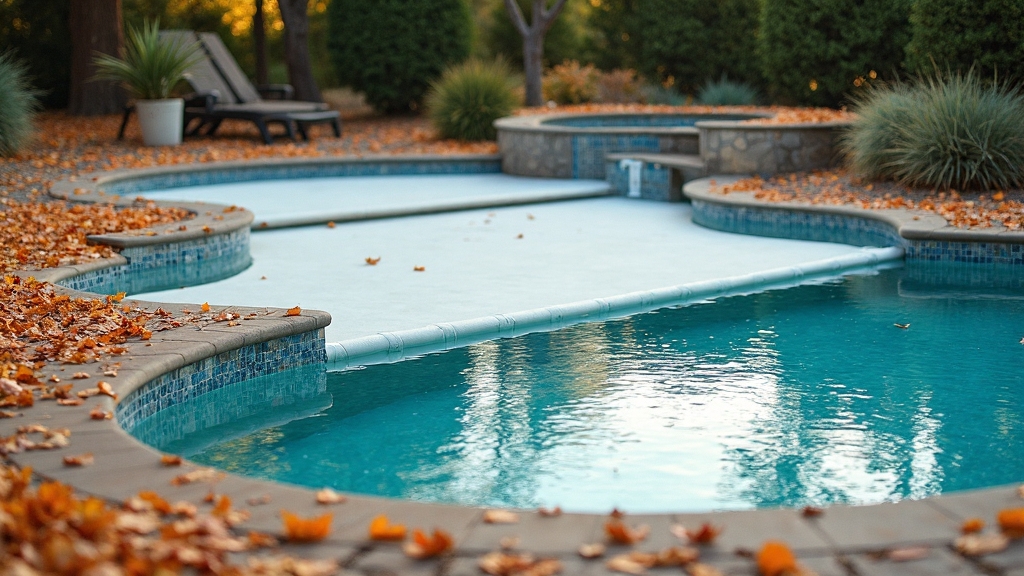
While your pool may be closed for the season, maintaining its condition throughout winter is crucial to ensuring a smooth reopening in spring. Start your pool winter prep by regularly inspecting the winter cover for sagging or excessive debris; use a pool cover pump to remove any water pooling on top. Keep the water level stable, ideally just below the skimmer, to prevent freeze damage. Periodically check water chemistry, maintaining a balanced pH of 7.2-7.6 and alkalinity between 80-120 ppm to deter algae growth. If temperatures drop considerably, consider adding pool antifreeze to plumbing lines. Finally, clean and store accessories properly to avoid rust and deterioration, ensuring everything’s ready for use come spring.
Frequently Asked Questions
How Do You Winterize a Pool Step by Step?
Think of winterizing your pool as tucking it in for a long, cozy nap. Start by cleaning the pool thoroughly, skimming and brushing to prevent stains. Test the water, balancing pH and alkalinity. Lower the water level below the skimmer or tile line, then drain and store equipment, blowing out plumbing lines. Finally, cover the pool securely with a winter cover, using weights to prevent sagging, and check it periodically for issues.
What Order Do You Add Pool Closing Chemicals?
To properly close your pool, you’ll want to follow a specific order for adding chemicals. Start by shocking the pool with calcium hypochlorite or dichlor to boost chlorine levels. Once that’s settled, test and balance the water‘s pH, alkalinity, and calcium hardness. Next, add a non-copper algaecide to prevent algae growth. If needed, use a metal remover for high metal levels, and finally, consider adding winterizing pills for ongoing maintenance.
What Chemicals Are Needed to Winterize Your Pool?
To winterize your pool, you’ll need key chemicals. Start with pool shock to eliminate contaminants and prevent algae growth. Next, add a non-copper algaecide like polyquat 60% to inhibit algae. Balance your pH with muriatic acid or sodium bicarbonate, keeping it between 7.2 and 7.6. Don’t forget calcium hardness increasers, ideally maintaining levels between 200 and 400 ppm, and a metal remover if necessary to prevent staining. Consider a winterizing chemical kit for convenience.
Do I Have to Clean My Pool Before Winterizing It?
Before you winterize your pool, think of it as preparing a time capsule; if you don’t clean it first, you’re sealing in potential problems. Yes, you’ve got to clean your pool thoroughly to prevent staining and algae growth. Remove all debris and scrub the surfaces to guarantee a pristine environment. This step’s essential for maintaining water quality and enhancing the effectiveness of winterizing chemicals, making your spring opening much smoother.