


Adding a spa to your existing pool can transform your outdoor experience, offering relaxation and enhancing your property’s value. Not only does it create a retreat for year-round enjoyment, but it can also appeal to luxury-seeking buyers, boosting the attractiveness of your backyard. With various types to choose from, and considerations for installation, you’ll find that a spa can be a worthwhile investment. Discover more about the benefits and options available to elevate your outdoor space.
The Cliff Notes
- Adding a spa can enhance relaxation and elevate your outdoor experience, making it a desirable feature for homebuyers.
- Built-in spas can increase property value by 5% to 15%, appealing to luxury-seeking buyers.
- Installation during initial pool construction can save costs and simplify plumbing integration.
- Regular maintenance is essential for longevity, requiring a commitment to water chemistry and equipment care.
- Consider your space and budget; in-ground spas offer aesthetic appeal but have higher installation costs compared to portable options.
Benefits of Adding a Spa
Adding a spa to your pool can greatly elevate your outdoor experience, and here are some compelling reasons why. First, it can considerably boost your property’s value, making it more appealing to potential buyers who crave luxury. When you opt for a pool renovation with spa, you’ll benefit from shared water systems, which can lower maintenance costs and simplify chemical management. Plus, spas offer year-round usability, allowing you to enjoy warm relaxation during colder months and a revitalizing retreat in the summer. Enhancing the aesthetic appeal of your backyard, pool and spa combos create a cohesive look that complements your landscaping. Ultimately, utilizing a spa transforms your outdoor space into a social hub for relaxation and gatherings, enhancing your overall well-being.
Considerations Before Installation
While the benefits of adding a spa to your pool are enticing, it’s important to contemplate several factors before moving forward with installation. Here are three key considerations:
1. Pool Condition: Assess your pool’s age and condition. Older pools may need significant renovations to accommodate a spa addition to the pool.
2. Space Availability: Evaluate the surrounding area to guarantee there’s enough space for the spa without costly landscape adjustments.
3. Installation Costs: Understand the financial implications. Built-in spas can range from $30,000 to $55,000 or more, especially if structural changes are necessary for converting your pool to a pool-spa combo. Compliance with local safety regulations is also essential to ensure safety features are integrated properly.
Consulting a professional is crucial for exploring design options and guaranteeing proper integration of plumbing and heating systems.
Types of Spas to Choose From
When it comes to choosing a spa, you have a couple of great options to evaluate. In-ground spas seamlessly blend with your pool for a stunning look, while portable spas offer flexibility and ease of use. Each type has its unique benefits, so let’s explore what fits your lifestyle best.
In-Ground Spas
If you’re reflecting on enhancing your outdoor space, in-ground spas present a perfect opportunity to combine relaxation and luxury with your pool. These spas can either be adjacent to the pool or integrated directly into the pool structure, offering both aesthetic appeal and easy access. Here are three key factors to evaluate:
1. Maintenance: Attached spas share water with your pool, simplifying maintenance and water chemistry balance.
2. Design Flexibility: Custom designs let you enhance your backyard’s aesthetics with features like hydrotherapy jets and integrated lighting.
3. Cost: The average cost ranges from $30,000 to $55,000, influenced by design complexity and structural modifications.
Ultimately, adding an in-ground spa can elevate your outdoor experience while providing numerous benefits.
Portable Spas
Portable spas, often referred to as hot tubs, can be an excellent addition to your pool area, especially since they offer flexibility and ease of use. They’re budget-friendly and can be easily relocated, enhancing your existing setup without extensive renovations. With a water depth of about 900mm (35.5 inches) and customizable jet arrangements, these spas provide a tailored hydrotherapy experience. You can choose from inflatable models, which are cost-effective and easy to store, or traditional above-ground hot tubs, known for their durability and insulation. Plus, they can connect to your existing pool plumbing for a shared water system. Installation usually takes just a day, making portable spas a quick and less invasive option compared to built-in alternatives.
Cost Factors and Budgeting
Adding a spa to your pool can be a rewarding investment, but it is crucial to comprehend the associated costs and budgeting considerations. Here are some key factors to take into account:
Adding a spa to your pool is a valuable investment, but understanding the costs and budgeting is essential.
1. Installation Costs: Expect to pay between $30,000 and $55,000 for a built-in spa due to necessary structural modifications and plumbing upgrades.
2. Type of Spa: Inground spas generally incur higher expenses than above-ground options, which range from $5,000 to $10,000.
3. Timing: Installing the spa during initial pool construction can save you money by avoiding additional excavation and plumbing work later.
Don’t forget to budget for ongoing maintenance costs, including chemicals and cleaning supplies, to guarantee your new spa remains a source of relaxation and enjoyment.
Maintenance and Care Requirements
Maintaining your spa is essential for ensuring a safe and enjoyable experience. You’ll need to establish a regular cleaning schedule, manage water quality diligently, and address equipment maintenance needs to keep everything running smoothly. By staying on top of these tasks, you can prolong the life of your spa and enhance its performance. Additionally, regular water chemistry management is crucial to prevent imbalances that can affect both your spa and pool systems.
Regular Cleaning Schedule
A regular cleaning schedule is essential to keep your spa in top shape and guarantee a safe, enjoyable experience. By sticking to a routine, you’ll enhance the performance and longevity of your spa. Here are three key tasks to include in your schedule:
1. Water Chemistry: Check and balance water chemistry every 1-2 weeks, especially after heavy use, to keep it safe and clean.
2. Filter and Jet Cleaning: Clean filters and jets at least once a month to prevent clogging and maintain efficiency.
3. Professional Maintenance: Schedule a thorough inspection and deep cleaning every 6-12 months to confirm all systems are functioning at their best. Regular checks on the filtration system are vital for effective pool sanitation.
Water Quality Management
Keeping your spa clean and inviting goes hand in hand with effective water quality management. You’ll need to regularly check and balance the water chemistry, as the higher temperatures in your spa require different chemical concentrations compared to your pool. Focus on maintaining appropriate levels of pH, alkalinity, and sanitizer. Don’t forget to clean the filters and jets frequently; debris can hinder circulation and compromise water quality. Monitor overflow between the hot tub and pool to avoid chemical imbalances, adjusting for water displacement from users. Consider scheduling periodic professional maintenance to guarantee all systems function properly, preventing costly repairs. Implementing chemical-free systems like UV or ozone sanitizers can also simplify your water quality management efforts.
Equipment Maintenance Needs
While you may be enthusiastic to enjoy your new spa, understanding its maintenance needs is essential for guaranteeing longevity and peak performance. Regular upkeep not only enhances your experience but also protects your investment. Here are key maintenance tasks to prioritize:
1. Water Chemistry: Regularly check and balance the water chemistry in both the spa and pool to guarantee safety and comfort.
2. Cleaning: Routinely clean filters and jets to maintain peak performance and extend equipment life.
3. Inspection: Inspect the spa structure for wear or damage, scheduling professional maintenance to catch issues early.
Impact on Property Value
When considering the addition of a spa to your pool, you’ll find that this enhancement can considerably boost your property’s value. Estimates suggest that a well-integrated spa may raise home value by 5% to 15%, depending on local market conditions. Homebuyers often see pools with attached spas as more desirable, leading to quicker sales and potentially higher offers. The aesthetic appeal of a spa enhances your backyard’s look, making it more attractive to buyers searching for outdoor living spaces. Additionally, properties with spas are perceived as luxurious, giving you an edge in a competitive market. Ultimately, investing in a spa can yield a good return, with homeowners often enjoying a resale premium that surpasses the initial installation costs.
Design Options for Integration
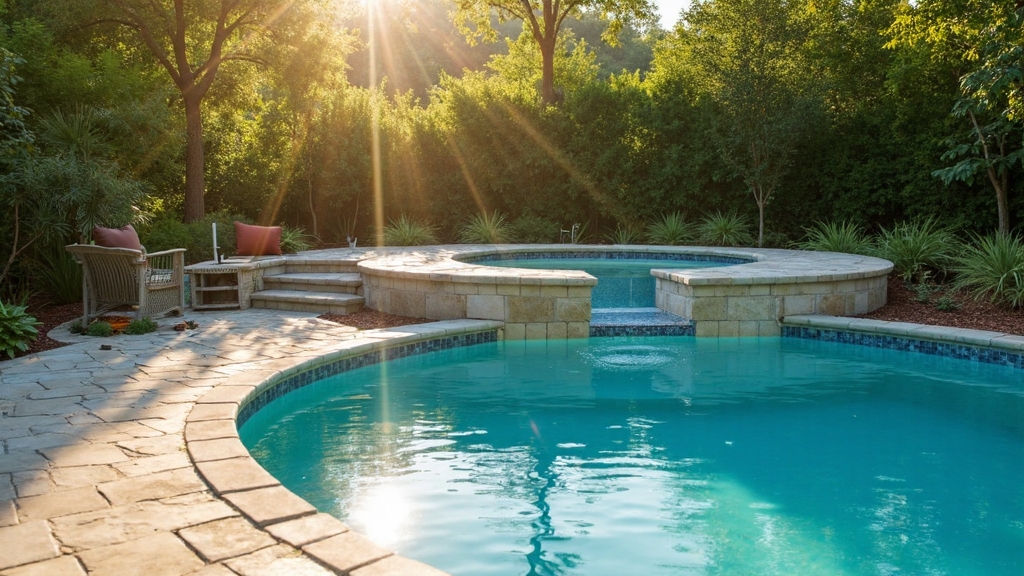
Integrating a spa into your existing pool can transform your outdoor space into a luxurious retreat, offering both aesthetic appeal and enhanced functionality. When considering design options, think about these key features:
1. Attached Spas: These share the pool’s water system, simplifying maintenance while enhancing the overall look.
2. Spillover Design: This allows water to cascade from the spa into the pool, creating a seamless change and stunning visual effect.
3. Custom Features: Incorporate built-in seating, water features, and LED lighting to elevate both functionality and aesthetics, making your spa a focal point.
Personal Lifestyle and Usage Preferences
Considering your personal lifestyle and usage preferences is essential when deciding to add a spa to your pool. If you often host gatherings or seek relaxation, an attached spa can enhance those experiences, providing seamless access year-round. Think about how you use your pool; if outdoor activities are a regular part of your life, a spa can complement your enjoyment. Additionally, consider the therapeutic benefits; spas offer relief from muscle tension and stress, appealing to those focused on health and wellness. Make sure to evaluate your backyard space, ensuring the spa integrates well without overcrowding. Finally, reflect on the maintenance commitment; regular upkeep is necessary, so assess if you’re ready to invest time to enjoy your spa’s benefits fully.
Frequently Asked Questions
Should You Add a Spa to Your Pool?
Adding a spa to your pool can elevate your outdoor experience greatly. It offers relaxation and hydrotherapy benefits year-round. You’ll find that an attached spa simplifies maintenance, sharing the same water system, which makes managing water chemistry easier. Plus, spillover designs enhance aesthetics while saving on heating costs. Consider your space, seating, and jet placement to guarantee it meets your needs. Overall, a spa can be a valuable addition to your home.
How Much Does It Cost to Add a Spa to an Existing Pool?
Adding a spa to your existing pool can be a significant investment. Typically, you’re looking at costs ranging from $30,000 to $55,000 for built-in options, factoring in structural modifications and plumbing upgrades. If you prefer a more budget-friendly route, an above-ground hot tub could cost between $5,000 and $10,000. Don’t forget to account for additional expenses like heating system updates and ongoing maintenance, which can add to your overall budget.
Is It Worth Getting a Spa With a Pool?
When you think of a luxurious Roman bath, it’s easy to see why adding a spa to your pool is worth considering. Not only does it enhance your outdoor space, but it also offers therapeutic benefits year-round. You’ll enjoy relaxation and leisure whenever you want. Plus, the combined aesthetic creates a stunning backyard. With potential increases in property value and shared systems, a spa can be a smart, enjoyable investment for your home.
Can You Add Water Features to an Existing Pool?
Yes, you can definitely add water features to your existing pool. By incorporating fountains, waterfalls, or spillover spas, you’ll enhance the overall aesthetic and create a more relaxing atmosphere. Many features can be integrated without major renovations, as they often utilize your current plumbing and electrical systems. Just make certain to consult a pool professional to guarantee proper planning and design, so everything complements your existing setup beautifully.