


Choosing the right pool shape for your backyard involves evaluating your space, style, and intended use. Consider your yard’s size, the home’s architecture, and whether you’ll prioritize relaxation or exercise. Popular shapes like rectangular or freeform pools each serve different needs. Don’t forget to factor in maintenance and compliance with local regulations. By examining these aspects, you’ll find the perfect fit for your outdoor oasis. Explore further to uncover more insights on customizing your dream pool.
The Cliff Notes
- Assess your backyard’s size and shape to determine the most suitable pool shape for optimal fit and functionality.
- Consider your home’s architectural style to ensure the pool design complements the overall aesthetic.
- Define the primary purpose of the pool, whether for exercise, relaxation, or entertainment, to guide shape selection.
- Evaluate local zoning codes and regulations to ensure compliance and avoid costly modifications during installation.
- Keep maintenance in mind; simpler shapes generally require less upkeep and are more cost-effective over time.
Key Considerations When Choosing a Pool Shape
When it comes to selecting the perfect pool shape for your backyard, several key considerations can greatly influence your decision. First, assess your backyard size and shape to find the best pool shape in Sonoma that complements your space and adheres to local regulations. Think about your home’s architectural style; modern designs often pair well with straight-lined pools, while organic shapes suit cottage-style aesthetics. Consider the pool’s primary function—whether it’s for exercise, relaxation, or entertaining, as each purpose aligns with different shapes. Don’t forget to evaluate the space for amenities like seating and outdoor kitchens, ensuring smooth movement. Finally, keep budget constraints in mind; traditional shapes typically incur lower construction and maintenance costs, making them a practical choice.
Popular Swimming Pool Shapes
When it comes to popular swimming pool shapes, your choice can greatly impact your backyard’s aesthetic and functionality. Classic rectangular pools offer a sleek and efficient design for serious swimmers, while freeform styles create a more relaxed, natural feel. Geometric options, with their clean lines, provide a modern twist that can easily integrate with contemporary landscaping.
Classic Rectangular Pools
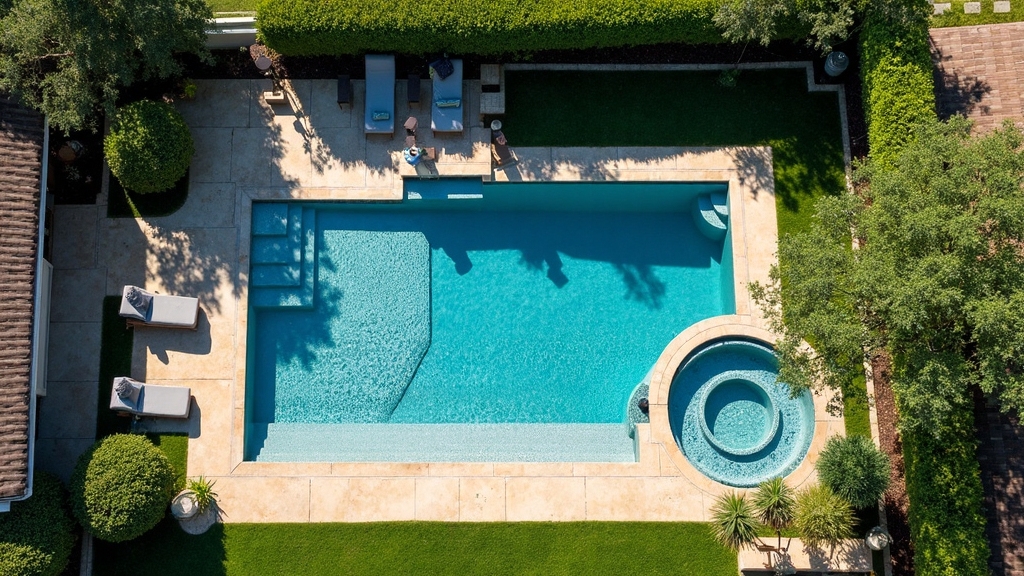
While many pool shapes offer unique advantages, classic rectangular pools stand out for their practicality and timeless elegance. When you’re choosing pool design, this shape’s 90-degree corners create an ideal environment for lap swimming and water exercise. The spacious layout not only enhances functionality but also conveys a modern, formal aesthetic that fits various landscaping styles. However, keep in mind that rectangular pools require more backyard space, potentially increasing construction costs compared to kidney or freeform pools. They’re easy to cover with motorized options, ensuring safety when not in use. Plus, custom modifications like rounded corners or integrated spas can enhance both functionality and visual appeal, making rectangular vs freeform pools a thoughtful consideration for your backyard oasis. Additionally, maintaining proper water chemistry is crucial to ensure a safe swimming environment in your rectangular pool.
Freeform and Geometric Styles
How do you envision your ideal pool blending seamlessly into your backyard? If you prefer a natural, organic feel, freeform pools are perfect. Their flowing curves create a lagoon-like atmosphere, ideal for complementing tropical landscaping. These designs can also accommodate large tanning ledges and integrated features, enhancing your outdoor experience. On the other hand, geometric pools offer a sleek, modern aesthetic with precise shapes like squares and rectangles. They cater to minimalist styles and bring a formal touch to your space. For a contemporary twist, consider a figure-8 pool, which maximizes swim area while maintaining elegance. Ultimately, your choice should reflect your personal style and how you plan to use the pool in your backyard sanctuary.
Assessing Your Backyard Size and Layout
Evaluating your backyard size and layout is essential for selecting the perfect pool shape that enhances your outdoor space. Start by measuring the total area; this helps determine the maximum size and shape your pool can have without overcrowding or violating zoning regulations. If your yard is long and narrow, a rectangular pool may be ideal, while freeform pools can beautifully complement irregular landscapes. Take stock of existing features like trees or gardens to guarantee integration without damage. Additionally, leave ample space around the pool for amenities such as lounging areas and pathways. Remember, smaller yards may benefit from compact designs, while larger spaces can accommodate more expansive options, providing versatility for your outdoor oasis.
Aesthetic Preferences and Style
When choosing a pool shape, think about how it aligns with your home’s architectural style—modern designs often shine with sleek, geometric lines, while traditional settings may benefit from more organic, freeform shapes. Additionally, the colors and materials you select can dramatically enhance the overall aesthetic; lighter tones can create a bright, open feel, while darker finishes may add a touch of elegance. By considering these elements, you’ll not only elevate your pool’s visual appeal but also create a harmonious outdoor space.
Modern vs. Traditional Designs
While your choice of pool shape might seem like a minor detail, it can dramatically influence the overall aesthetic and functionality of your backyard. Modern designs, with their straight lines and geometric shapes, offer a sleek, minimalist vibe that aligns with contemporary homes. In contrast, traditional shapes, such as kidney or Roman pools, bring warmth and intimacy, perfect for classic architecture.
| Modern Designs | Traditional Designs |
|---|---|
| Rectangular shapes | Kidney-shaped pools |
| Clean lines and symmetry | Rounded edges |
| Ideal for lap swimming | Creates a relaxed vibe |
| Complements sleek homes | Enhances ornate styles |
Ultimately, your choice should reflect your architectural style and personal preferences to create a harmonious outdoor space.
Color and Material Choices
Choosing the right colors and materials for your pool can transform your outdoor space, ensuring it not only looks stunning but also meets your functional needs. Consider how the pool’s colors harmonize with your home’s architecture and surrounding landscape. Shades of blue, turquoise, and dark gray are popular choices, enhancing water clarity and overall visual appeal. Your material selection—fiberglass, vinyl, or concrete—affects both aesthetics and maintenance requirements. Opt for textured surfaces for safety, as non-slip finishes can prevent accidents. Don’t shy away from customization; tile mosaics or colored plaster can elevate your pool’s design, allowing for personal expression. Ultimately, your choices should reflect your style while ensuring practicality and safety in your backyard oasis.
Functionality and Intended Use
Although the aesthetic appeal of a pool is significant, its shape must primarily align with how you intend to use it. Consider your priorities when choosing the right design:
- **Lap Swimming**: Opt for a **rectangular shape** to facilitate exercise.
- **Relaxation**: **Freeform designs** offer a lounging oasis with a natural look.
- **Family Fun**: **L-shaped pools** provide shallow areas for play, making them versatile.
- **Safety**: Kidney-shaped pools enhance **safety** with a clear separation between shallow and deep ends.
- **Surrounding Amenities**: Think about how the shape will affect landscaping and space allocation.
Choosing the right shape not only enhances functionality but also guarantees your pool meets your lifestyle needs.
Budget and Cost Considerations
When planning your backyard pool, understanding the financial implications of different shapes can greatly influence your decision. Complex designs like free-form or custom geometric pools often come with higher installation costs due to added perimeter footage and labor. In contrast, rectangular and standard shapes, such as kidney or oval pools, offer budget-friendly options thanks to straightforward construction. If you’re considering extras like spas or lighting, remember these can considerably elevate your total expenses. Additionally, regular shapes simplify pool cover installation, potentially lowering future maintenance costs. Finally, don’t overlook local zoning codes, as compliance may introduce unexpected expenses based on the shape and features you choose. Balancing aesthetics with budget is key to your satisfactory pool experience.
Frequently Asked Questions
How to Choose a Pool Shape?
When you’re choosing a pool shape, start by evaluating your backyard’s size and layout. Think about your aesthetic preferences—do you lean toward modern linear designs or more organic shapes? Consider how you’ll use the pool; if it’s for lap swimming, a rectangular shape might be best, while a freeform design suits relaxation. Don’t forget to plan for surrounding amenities, as they can influence the space and shape you ultimately choose.
What Is the Most Cost-Effective Pool Shape?
When it comes to pool shapes, think of it as finding the perfect puzzle piece for your backyard. Rectangular pools are often the most cost-effective choice, thanks to their simple design that maximizes space and minimizes materials. Kidney-shaped pools strike a balance between aesthetics and cost, while free-form designs can stretch your budget due to their complexity. Always keep long-term maintenance expenses in mind, as they can impact your overall investment considerably.
What Is the Easiest Pool Shape to Clean?
When considering the easiest pool shape to clean, rectangular pools often come out on top. Their straight edges and uniform design allow for efficient skimming and vacuuming, minimizing the time and effort you’ll need for maintenance. In contrast, freeform pools with their curves can trap debris, complicating your cleaning routine. If you value convenience, opting for simple geometric shapes like squares or circles can also streamline upkeep considerably, making your pool experience more enjoyable.
Should I Get a Round or Rectangle Pool?
When deciding between a round or rectangular pool, think about your yard’s size and your intended use. Rectangular pools are perfect for activities like lap swimming and can enhance a modern aesthetic, while round pools offer a more relaxed vibe suited for lounging. If space is tight, a round pool might fit better, but for versatility and formal appeal, a rectangular shape could be the right choice. Consider how you’ll use the space before deciding.